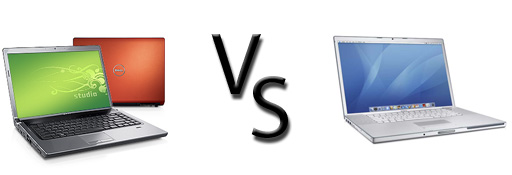
How They Compare: Dell Studio 15 vs. 15” MacBook Pro

21 09 2008

My name is Keith Hobin, and I’m the managing editor here at theiLife. I originally joined theiLife back in June, but now I’m making my first post. I grew up in Montclair, NJ with Matt, Sidney, and a few of the other iLife writers. I graduated from Montclair High School this year and will be attending Drexel University as an Information Systems major. I prefer the Microsoft side of computers and plan on adding a little diversification into this blog. You will be hearing from me from time to time with new stories and information about the goings on of the blog. If you want to contact me, you can email me at keith@theilife.com . For my full biography, check out the about page section.


untitled-2 How They Compare: Dell Studio 15 vs. 15” MacBook Pro
 

    In getting ready for my attendance of Drexel, I have recently purchased one of Dell newest Laptop, the Studio 15. The Studio line is intended to have a mix of features from the XPS and Inspiron line at prices starting around $650 and around $750 for a decent configuration. For my Studio 15, I paid $ 1,839.94 with a 4 year warranty, accidental damage protection, and lojack, before tax and shipping. A PDF of the invoice / configuration will be posted along with this. Just the price difference of $460 alone, a MacBook Pro being $2,300, is a good reason to consider another brand. But let’s delve into the features of each computer.

NOTE: All Comparisons made will be between MY Dell Studio 15 and the 15″ 2.5GHz MacBook Pro. However, I will note the optional features I selected for my dell and will note higher features that I opted not to get. When I discuss option prices, the price increase will be from the cheapest configuration available to the general public at the time of writing. To be fair, both of the base prices of the computers are with educational discounts and I received an extra discount for taking the 4 year warranty.

Read more…


The Phone To Beat The iPhone: Meet Google’s Android

8 07 2008

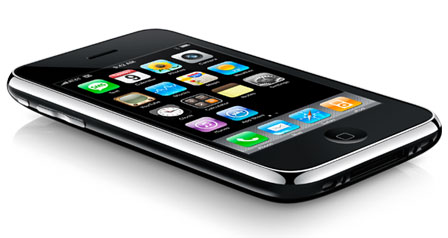
With the new iPhone 3G coming out later this week, take a look at what some other companies are doing to compete with the iPhone.

apple-iphone-3g-2-300x159 The Phone To Beat The iPhone: Meet Googles Android

The iPhone is considered by many, to be the most revolutionary phone to ever be released. It is a totally new experience for may users, with it’s 3.5 inch touch screen; mobile web browsing with Safari (Apple’s web browser), using either WiFi or the AT&T mobile internet services; a full built in iPod for music listening and more. On top of all these amazing features, it also functions as a phone! The iPhone was the first “smartphone” that slickly combined many features in a manor that only Apple could pull off. However with every revolutionary product, competitors come out of the woodwork, most of them are clearly cheap knockoffs, and some of them are somewhat acceptable replicas, however, every once in a while someone comes out with a product that clearly out does the original. As of yet, however, no one seems to have come out with a real “iPhone Killer”. So far, the most notable iPhone doppelgänger is LG’s VX10000 a.k.a. “the Verizon Voyager”, which is available on the Verizon Wireless network. While the Voyager is an okay competitor, the iPhone still tops it for many reasons, not the least of which is that the Voyager runs on a poorly designed Verizon platform, which is somewhat lacking, while the iPhone runs on a derivative of Apple’s powerful OS X.

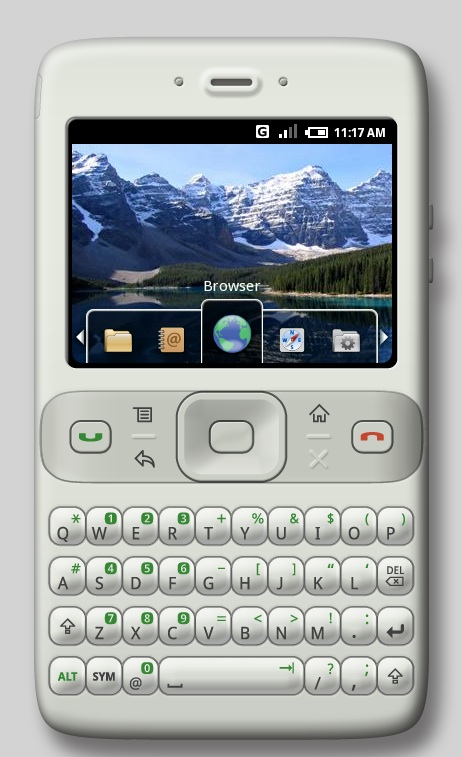
Clearly something is missing here, really one of the most significant things keeping all iPhone competitors down is the lack of a solid grounding in the OS and UI department. Apple has years of experience, as well as a solid OS to work with, while every other manufacturer has to start from the ground up and basically reinvent the wheel. But what if there was a company with a solid background in designing intuitive interfaces, that could design an OS as elegant as Apple’s OS X. Then perhaps the major phone manufacturers could concentrate on what they do best and build phones. Perhaps from this marriage of elegant software, with efficient hardware, would come a phone that could truly rival the iPhone. Well one of the most well known technology companies is working on just that, an elegant open source operating system. You know this company as one with a history of recognizing the potential in small projects with sufficient funding, as well as being the company that reinvented search. Google has stepped into the mobile phone ring, and for real this time, not just integrating services with other mobile operating systems, but with a whole new mobile operating system, called Android.

android-183x300 The Phone To Beat The iPhone: Meet Googles Android

Google, the worlds biggest and most well known search company, has recently teamed up with Andy Rubin, the creator of the Sidekick, to create an operating system for many mobile platforms, called Project Android. While many people have been talking about a “Google Phone” for as long as they have been talking about an “Apple Phone”, Google is not expected to release any specific hardware to run Android. One might make the comparison to the so-called OS wars between Apple and Microsoft: on one hand you have Apple with their tightly controlled hardware, which depending on your viewpoint, is either a Pro or a Con; while on the other hand you have Microsoft which currently dominates the OS usage rates, (though not for long) because of it’s “open” Operating System, meaning it isn’t tied to any specific hardware, the only requirement is that the machine has to be capable of running it. Google has taken the more open road here as well, opting to not make the limiting factor the hardware, but the ingenuity of the person attempting to install it.

Android also has a SDK that has already been released for developers to play with. Using Java, developers can make applications from scratch that do anything from enable you to check your email, to playing the hottest new game. Along with its operating system, Android relies on Linux 2.6 to run its core services such a security, memory, and any other behind the scenes work a computers operating system would normally do.

So while many companies have tried to accomplish the task of making a phone that is sleeker, faster, and just better than the iPhone, Google has come at it from a different perspective. Instead of spending all their money on building a sleek phone, Google has spent their time on making an operating system and letting the companies and people install on the phones they like. And by allowing developers to make applications for Android before it has been released, they have allowed the people to make the operating system they would like instead of letting Google’s development team spend many tireless hours guessing how to make it perfect. So with Android’s expected release to be sometime later this year, many wonder if the iPhone will be able to stand supreme among its competitors. Or will phones running Android become the Phones to beat the iPhone? We will soon find out.


Zune juggernaut breaks into more DRM, NBC hot to trot

12 05 2008

This is a guest post from Adam Ford of theDigitalLifestyle.tv.

How do you make the Zune better? Well, naturally you add the ability for it to police your content for anything pirated. What’s so wrong with that? You shouldn’t be pirating music or videos, has the RIAA not taught you anything!?!

The story goes that NBC abandoned ship because of Apples tight leash on pricing and their unwillingness to police pirated material. Apparently Microsoft is okay with NBC selling their content for the same price as Apple would have just as long as Microsoft absorbs the difference in cost between that price and the price NBC wants to sell it for. Lets look at that for a moment. If Apple was going to sell an episode of Heroes for $1.99, and NBC wanted to sell that same episode for $6.99 then Microsoft is basically paying NBC $5.00 for each download. I really can’t imagine why Apple wouldn’t want to do that . . . seems like a GREAT business deal.

As if that decision wasn’t confusing enough, Microsoft is working on what I can only assume will be an update to it’s desktop software, to detect bootleg media and disallow it from being transfered to the device.

My question: How does it know? This is the age old question of the thermos. The thermos keeps hot stuff hot and cold stuff cold . . . but how does it know? When I go out and purchase a DVD and use good old handbrake to make a legitimate backup how is the software going to recognize this as being legitimate and allow me to put it on my Zune (DISCLAIMER: I don’t have a Zune, don’t want a Zune, and this whole thing seems like a giant disaster)?

As you can see the move to police your library raises all kinds of concerns. I don’t see how this approach really sells more of anything for Microsoft. It seems like they’re going to lose money on each download AND push the Zune in a less desirable direction (as if poop brown wasn’t enough). I think I’ll just keep my iPod.


Windows to Mac: Prologue

22 04 2008

To understand my switch to the Mac requires a little background.

I’ve been a dedicated Windows user since the DOS age. Onto Windows 95, to 98, to XP, I’ve never truly experienced another operating system. But over the years I’ve grown very tiresome of fixing the problems on Windows. Everyday seems like a new issue appears just to piss me off. Well I’m finally sick of it.

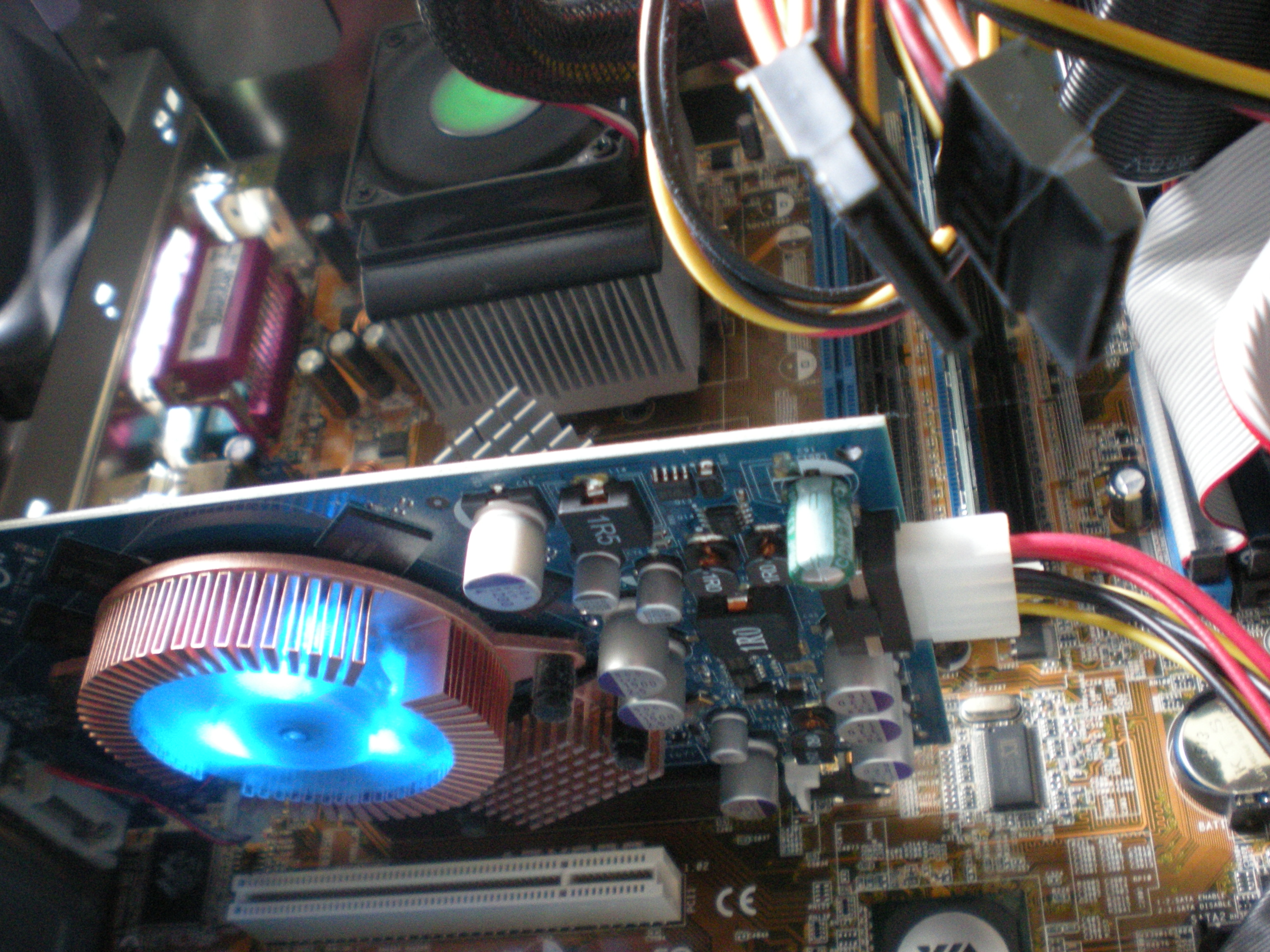
Needs more LEDs
Needs more LEDs!

So what finally sent me over the edge was this year when I was (once again) trying to fix a memory issue my computer has been experiencing since its last reincarnation. My current rig actually started from the bones of a ‘95. I inherited the computer from my brother at 11 years old in the winter of 2001-2002, as my brother got a overpriced Alienware (which he had to send back about 6 times over the course of its first year). Upon receiving the aged machine, I decided that I would build a custom computer with the help of my neighbor. New case, new motherboard, 1.4 gHz AMD Athlon processor, and a salvaged graphics card. It started out rocky, I had a 6 gb harddrive, half of which was reserved to run windows, the other half I had to conserve and manage. This was soon met with my graphics card already being outdated, as well as the release of XP and other problems.

2002 - new graphics card; new harddrive; XP
2004 - fried my motherboard (dust); new board, new graphics card, new cpu;
2005 - fried my motherboard (electrical short); new harddrive
2006 - new graphics card

Currently, I’m running a GeForce 6600, 2.8 AMD Athlon XP, a gig of ram.

This computer has run into numerous issues, I can’t even recall all the software problems I ran into that either caused me to need a hardware upgrade, or a reinstall of windows. And this latest iteration has a major ram problem which, after trying many different paths, seems to be a motherboard issue. It is not due to incompatibility, it’s due to the motherboard being lower quality than what I expected.

So after 7 years of reboots and reconfiguration, I think it is time to retire my machine, and aim for something that I don’t think I’ll have to spend the next couple years fighting to get into working shape. In (hopefully) less than two month’s I’ll be ordering a brand new, shiny MacBook Pro! I will detail my switch over the coming weeks in more detail and certainly keep you all posted about my new MacBook Pro.


Over the Hill - Part II

28 12 2007


Over The Hill

Continually, year over year, Apple has been selling more Macs. This year has been no exception- the Mac market share continues to grow. This years surge might have seen more sales thanks to Vista or, release of Leopard. Either way, there is some kind of ‘iPod Halo’ effect going on.

Be it the iPod, Leopard or iPhone- Apple is getting their name out and, people are moving to the Mac. It is interesting to watch a new generation of switchers come to the platform after using a Mac for the entirety of my computing life. Many new switchers seem to be mesmerized by Photo Booth or iChat video conferencing- which my cousin and I laugh at, we were doing this almost 5 years ago! The new switchers seem to neglect some of the founding principles of the Mac platform because, face it- they’ve been using Windows.

While other PC users rejoice that they no longer have to run Anti-Virus or Spyware programs anymore on their Mac, which is something that I still do not do on my PC or Macs (yes, I own 4 PCs). The change of Mac users from the generally more computer literate to the less literate will be interesting. The iPod is simple, powerful and, successful. Although the Mac is built around the same concept, it is a computer.

I have found, working with other people who aren’t very computer literate that they prefer a static setup- be it Windows or Mac OS. They want everything to look the same, nothing to change- all they want to do is check their email (or whatever it is). So you can (or can’t) imagine how a switch to a Mac from a PC can become traumatic for those accustomed to Windows- they just want to go back.

The same can be said about the switch from VHS to DVD- other than video geeks, it takes a couple years for ‘the masses’ to make the switch. The switch usually comes with a hardware replacement. For example, our VHS player stopped working so we bought a DVD/VHS combo about 6 years ago. When that dies, we will probably just get another DVD player- especially considering the status of the new formats. So, Vista is what is brining PC users to the Mac OS- their XP machine needs replacement, and fearing Vista (or after experiencing it), they get a Mac.

Keep tuned for Part III.


Over the Hill - Part I

18 12 2007


Over The Hill

After the continued success of the iPod in 2005, the Apple community was running wild with the concept of the iPod ‘Halo Effect’. The iPod ‘Halo Effect’ was an idea that with Apple’s success in the iPod product line, Windows users would be more inclined to buy other Apple products- mainly their computers. From Macworld to Piper Jaffray and Morgan Stanley, everyone was abuzz with the idea, some even tried to predict numbers.

As time passed, we began to stop hearing about the iPod ‘Halo Effect’ that is, by that name. Since 2005, Apple has surpassed the 100 million iPods sold and has seen significant increase in sales, seeing its worldwide market share rise to 3.2. Apple is predicted and on track to set a record high Holiday Season sales of both iPods and Macs. So what is behind this recent surge? The iPod ‘Halo Effect’?!

The answer is actually Windows Vista. Almost 6 years in the making, Windows Vista is keeping PC users from upgrading from XP. Criticized by some for its compatibility issues, bloated code and demanding system requirements, Vista has been met with loads of negative press by the PC community. Meanwhile, within this time, Mac users have seen 5 upgrades to OS X and the switch to Intel processors.

Recently Apple released its latest iteration of OS X this October with Leopard. Mac OS X Leopard has brought significant improvements to OS X, and has been met with both strong praises and sales, selling 20% more copies in one month than Tiger did. This coupled with competitive Laptop and Desktop hardware offerings has compelled some to make the switch.

Keep tuned for Part II.


The Apple TV

12 12 2007


AppleTV

The speculation is now behind us: the Apple community has confirmed that the Apple TV was not a success this year, selling approximately 400,000 units. Some blame it on the hardware or the lack of iTunes video content, but the real issues with the Apple TV and other “Media Centers” are the consumers.

At this point in time, television is in a different arena from computers and the internet’s digital content. Television has dominated home entertainment for decades and not until recently, the last 5 years or so, are computers beginning to play a large role in media consumption. Like MP3 players in 1999 that attempted to bring digital music away from the computer, ‘Media Centers’ haven’t taken off. So where is the iPod of the ‘Media Center’ industry?
Read more…